
Why the Start of the Year Is the Perfect Time for a Website Overhaul
There is something about January that makes people and businesses ready for change. New year resolutions, fresh goals, updated business plans: the start of a new year is a natural inflection point. And if your website has been underperforming, looking dated, or failing to generate leads, there is no better time to address it than right now, at the beginning of 2027.
This is not just motivational thinking. There are genuine strategic and practical reasons why January and the first quarter of the year offer the best conditions for a website redesign. From budget cycles to seasonal business patterns, the timing works in your favour. Let us explore why, and walk through how to approach a redesign that actually delivers results.
Five Reasons January Is Ideal for a Website Redesign
1. Fresh Budget, Fresh Priorities
For most Ghana businesses, January marks the start of a new financial year or budget cycle. Marketing budgets are being allocated, capital expenditure is being planned, and strategic priorities are being set. This is the moment to make the case for a website redesign, while the budget is fresh and before competing priorities consume available funds.
Waiting until mid-year often means the budget has already been committed elsewhere, and your website project gets pushed to "next year" yet again. If your site needs an overhaul, make it a Q1 priority.
2. Lower Demand Means Faster Turnaround
January and February are typically quieter months for web design agencies and freelancers in Ghana. The rush of year-end projects and holiday campaigns has subsided, and many agencies have more capacity to take on new work. This means you are more likely to get your preferred designer or development team, and the project timeline may be shorter than it would be during busier periods later in the year.
Starting in January also gives you a realistic timeline. A well-executed website redesign typically takes four to eight weeks from briefing to launch. Begin in January, and your new site can be live by February or March, giving you the entire year to benefit from improved performance, better SEO, and stronger lead generation.
3. Capitalise on New Year Search Behaviour
January sees a spike in business-related searches in Ghana. People are searching for new suppliers, comparing service providers, and making purchasing decisions for the year ahead. Organisations are procuring services, renewing contracts, and evaluating vendors. If your website is outdated, slow, or not mobile-friendly during this critical period, you are missing opportunities right when decision-makers are most active.
4. Align with Your 2027 Business Strategy
Your website should reflect your current business, not the business you were running two or three years ago. If you have launched new services, entered new markets, adjusted your pricing, or refined your brand messaging, your website needs to keep pace. January is the natural time to align your digital presence with your updated business strategy.
5. Tax and Financial Advantages
For Ghana businesses, a website redesign is a legitimate business expense that may be deductible. Investing in your website at the start of the financial year allows you to plan the expense into your annual accounts from the outset, rather than scrambling to find budget later. Consult your accountant about how to categorise the investment for maximum tax benefit.
Seven Signs Your Website Needs a Redesign
Not every website needs a complete overhaul. Sometimes a refresh, updated content and minor design tweaks, is sufficient. But if two or more of the following apply to your site, a redesign is likely overdue.
- It is more than three years old. Web design standards, browser capabilities, and user expectations evolve rapidly. A site that was modern in 2023 or 2024 may now look and feel outdated to visitors.
- It is not mobile-responsive. If your site does not adapt seamlessly to smartphones and tablets, you are delivering a poor experience to the majority of Ghana's internet users. Google also penalises non-responsive sites in search rankings.
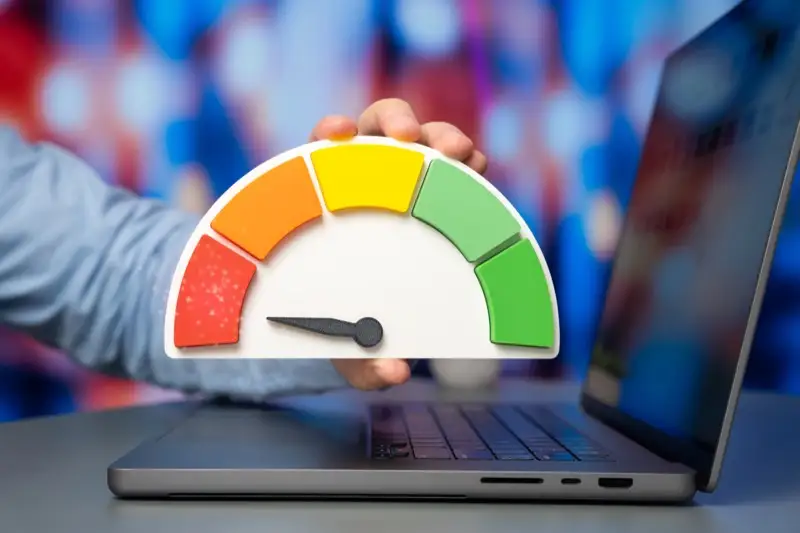
- It loads slowly. If your pages take more than three seconds to load, you are losing visitors. Test your speed with Google PageSpeed Insights; if your mobile score is below 50, your site needs serious work.
- Your bounce rate is high. A bounce rate above 70% in Google Analytics suggests visitors are arriving at your site and immediately leaving. This usually points to poor design, slow loading, or content that does not match what visitors expected.
- It does not reflect your current brand. Your logo, colours, messaging, or service offerings have changed, but your website still shows the old version. This creates confusion and undermines trust.
- You cannot update it yourself. If making simple changes like updating a phone number or adding a blog post requires a developer, your site's CMS (content management system) is either outdated or was poorly implemented. A modern website should empower you to make basic updates independently.
- It is not generating leads. If your website has a contact form but you are not receiving enquiries, or if visitors are not calling the number on your site, something is fundamentally wrong with the user experience or the content.
For a comprehensive evaluation, follow our step-by-step guide to improving website performance to identify specific technical issues.
Planning Your Redesign: What to Keep, What to Change
A website redesign does not mean starting from scratch. In fact, discarding everything and building from zero is often wasteful. Here is how to decide what stays and what goes.
What to Keep
- Content that ranks well in Google. If specific pages are driving organic search traffic, do not delete or radically change them. Preserve the URLs, headings, and core content. Improve the design around the content, not the other way around.
- Your domain name. Never change your domain as part of a redesign unless you have an extremely compelling reason. Your domain has accumulated SEO authority over time, and changing it resets much of that value.
- URL structure (where possible). If your current URLs are clean and descriptive (e.g., yoursite.com/services/web-design), keep them. If they must change, implement proper 301 redirects from old URLs to new ones.
- Customer testimonials and case studies. Social proof is hard to accumulate. Carry forward all positive customer feedback, reviews, and success stories.
What to Change
- Visual design. Update the look and feel to reflect current design standards. This includes typography, colour usage, spacing, imagery, and layout patterns.
- Navigation and information architecture. Reorganise your site structure based on what your visitors actually need, not what your organisation chart looks like. Use analytics data to understand which pages are most visited and make them easily accessible.
- Calls to action. Every page should guide visitors toward a clear next step, whether that is contacting you, requesting a quote, downloading a resource, or making a purchase.
- Photography and imagery. Replace generic stock photos with authentic images that reflect your actual business, team, and customers. In Ghana, using imagery that resonates locally makes a significant difference.
- Performance and technical foundation. Use the redesign as an opportunity to fix underlying technical issues: optimise images, clean up code, improve hosting, and ensure HTTPS is properly configured.
Choosing the Right Design Partner
The success of your redesign depends heavily on who builds it. Here is what to look for when selecting a web design partner in Ghana.
Portfolio and Relevant Experience
Review the agency's or freelancer's portfolio. Have they built websites similar to what you need? Do those sites look modern, load quickly, and work well on mobile? If possible, contact one or two of their previous clients to ask about the experience.
Process and Communication
A good design partner will have a structured process: discovery and briefing, wireframing, design, development, testing, and launch. They should communicate proactively, provide regular updates, and involve you in key decisions. Be wary of anyone who promises to "just handle everything" without your input.
Post-Launch Support
Your website needs ongoing maintenance after launch: security updates, bug fixes, content changes, and performance monitoring. Ask potential partners about their post-launch support packages and response times. A beautiful website that nobody maintains will degrade quickly.
For detailed guidance on evaluating potential partners, read our comprehensive guide on how to choose a web design company in Ghana.
Budget Expectations for Ghana Businesses
Website redesign costs in Ghana vary widely depending on the scope and complexity of the project. Here are realistic benchmarks to help you plan.
Simple Brochure Website (5-8 pages)
A straightforward business website with a home page, about page, services pages, and a contact page. Expect to invest GH₵3,000 to GH₵10,000, depending on the designer's experience and the level of customisation required.
Service-Based Business Website (10-20 pages)
A more comprehensive site with detailed service pages, a blog, case studies, and integrated contact forms. Budget GH₵8,000 to GH₵20,000. This is the most common redesign scope for Ghana SMEs.
E-Commerce Website
An online store with product catalogues, shopping cart functionality, and integrated payment processing (including mobile money). Expect GH₵15,000 to GH₵40,000 depending on the number of products and the complexity of the payment integration.
Custom Web Application
A bespoke platform with custom features such as customer portals, booking systems, or specialised databases. These projects start at GH₵25,000 and can exceed GH₵100,000 for complex applications. For projects of this scale, working with an experienced software development team is essential.
Ongoing Costs to Factor In
- Domain renewal: GH₵80 - GH₵250 per year
- Hosting: GH₵120 - GH₵6,000 per year depending on plan type
- SSL certificate: GH₵0 - GH₵600 per year
- Maintenance and updates: GH₵200 - GH₵800 per month
- Content updates and new pages: GH₵150 - GH₵500 per update
To understand the full picture of ongoing costs, our detailed breakdown of website maintenance costs in Ghana covers everything you need to budget for after launch.
Your Redesign Timeline: A Realistic Plan
Here is a realistic timeline for a Ghana business website redesign, assuming you start in January.
- Week 1-2 (January): Research and select your design partner. Gather requirements, define goals, and prepare content (text, images, logos).
- Week 3-4 (January/February): Discovery and strategy phase. Your design partner reviews your current site, analyses competitors, and creates wireframes showing the layout and structure of key pages.
- Week 5-6 (February): Visual design phase. You review and approve design mockups for key pages. Provide feedback and request revisions.
- Week 7-9 (February/March): Development phase. The approved designs are built into a functioning website. CMS is configured, forms are connected, and content is populated.
- Week 10 (March): Testing and launch. Thorough testing on multiple devices and browsers, final content review, SEO setup, and go-live.
By March, your new website is live and ready to work for your business throughout 2027 and beyond.
Do Not Wait Until It Is Urgent
The worst time to redesign a website is when it breaks or when a critical business opportunity demands it. Rushing a redesign leads to poor decisions, cut corners, and a result that needs to be redone within a year.
January gives you the luxury of time: time to plan properly, time to find the right partner, time to create quality content, and time to test thoroughly before launch. It aligns with your business planning cycle, your budget cycle, and the natural energy of a new year.
If your website is not performing the way it should, if it looks dated, loads slowly, or fails to generate the leads your business needs, make the decision now. Invest in a professional redesign that positions your business for a strong 2027. Your future customers are already searching for you online. Make sure they find a website that impresses.