Home Blog Page 4

How to choose a top-ranking and memorable domain names

Where do you start? What are in domain names? Once you have decided on your domain name, what should its extension be? Where do you register it, and how do you ensure it is easily remembered? This article will help you choose the best domain name options so your website stands out.

Choosing a domain name can be a trying experience. There are so many things to consider, and it is not uncommon for you to lose countless hours in a futile attempt to find the perfect domain. It is all too easy to purchase a domain name that you later regret. What was beneficial and stylish a few years ago is now ungainly and difficult to express. If your preferred domain has already being taken, you may accept whatever you can obtain to have it expire later and be left with one you do not like.

Worse, you might wind up paying a lot more for it later, or even spending a lot of money rebranding and redirecting it years after you have established yourself, simply because the domain you have always wanted becomes available.

It may be tempting to buy quickly to prevent others from having the one you want, but it will not hurt to spend a few minutes making sure you are acquiring what you want, what works, and what will serve you well in the long run.

When you are ready to start a website, you will want to choose a domain name that’s memorable, easily remembered, and accurately describes your business. Here are some tips on how to do it:

1. Make sure the domain name is available.

It is crucial to make sure the domain name you want is available before getting too attached to it. You can do this by running a WHOIS search on the domain name (e.g., [http://www.whois.com/]). This search will tell you who owns the domain name when it expires and what type of registration is required (e.g.,.com). If the registration information is not shown on WHOIS, try searching for an email address associated with that URL using sites like [http://www.email-address-checker.org/].

2. Keep it brief and to the point.

You want a domain name that is easy to read, pronounce, and remember. It also helps if the text is simple to type. The shorter your domain name , the easier it will be for people to remember and type it into their browser bar when they want to revisit your site—which means more traffic! Also, keep in mind that URLs that contain hyphens (-)can be confusing when reading them aloud or typing them quickly into web browsers like Google Chrome or Mozilla Firefox.

One of the most critical aspects of marketing is being remembered, and simplicity is usually the best option. If you can make it no longer than two or three words long, with no phonetic bits to confuse people’s ears (razinghomes.com and raisinghomes.com may sound identical but mean the exact opposite – confusing, right? ), and with no unusual spelling, you are well on your way to creating a domain name that works for you.

It is best to avoid using slangs and business jargons unless you are super-niche and expect a super-niche audience. Vernacular varies from country to country, which can be helpful in some situations (for example, see skintdad.co.uk), but “skint” and other slang terms may not be used much outside of the UK and Australia.

3. Make it unique

There is no getting around the requirement to be unique regarding company names. You do not want to get yourself into legal problems, but you also do not want to be remembered as the only one. Googling will reveal company names and URLs(similar or identical to yours) which have previously been registered.

In addition, you may look up who is writing under what name in business directories, phone books, and blog curation services and then make your selection based on what you discover.

4. Getting it right in the eyes of the law.

If you are sued for infringement because you began business as a firm with the same name as, or can easily be mistaken for, another company, it will cost you a lot of time, money, and suffering. In addition, you could irritate another business that has worked hard to establish itself and is now losing traffic to you by a lesser amount.

On the internet, copyright is difficult to regulate, but there are steps individuals may take if their intellectual property, such as blog names and URLs, has been stolen. I cannot emphasize how important it is to double-check other blogs, websites, and business names before purchasing a URL.

There may be other individuals with the same blog name as you, but they have not purchased the official domain, or their blogs have been static (like happened to me!).

5. “Branding matters.” Getting it right.

You will always want people to understand what you are about in as little time as possible. You do not want a URL that does not honestly say what you do or is not understandable in a few seconds. It is essential to research and brainstorm to determine what is popular, what works, what best describes your company, and what makes the most significant first impression.

You may want to name your blog or website something lengthy, but that does not imply that your URL must be the same. Like your business card, the URL should be brief, sweet, and to the point, offering the recipient just enough information to get started. If necessary, you may expand on your site, but long URLs are not generally suitable for giving potential readers an idea of what to anticipate from your blog.

6. Select the right extension.

There were just a few options back then-. com,. net,. org, and so on, and many of them had additional extensions depending on whatever nation you were in. While it is undoubtedly prudent to stick with what works, additional possibilities are to be considered, particularly if they complement your company’s name or genre.

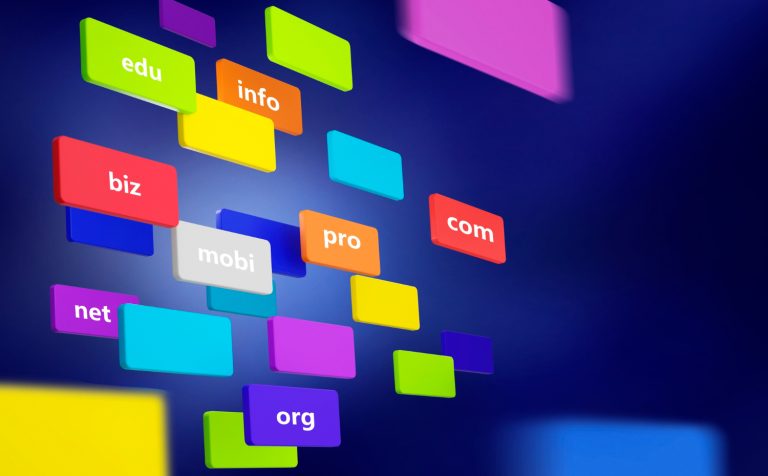
Newer ones include Biz, Info, Me, Shop, and many other options (a complete list may be seen here). However, bear in mind that most people’s brains default to “. com” when attempting to remember URLs, so a unique one may result in a loss of visitors. Check here for a full list of domain name extensions.

7. SEO is important. Getting it right!

Search engine optimization is an integral consideration when choosing a domain name. SEO stands for Search Engine Optimization. It is making sure that Google can find your site and rank it highly when people search for things related to your business or industry. SEO is important for driving quality leads to your website.

It involves a variety of tactics, such as keyword selection, content writing, backlinks, and user reviews. Google’s algorithm is constantly being improved to deliver the best results for users, not just domain names with the most backlinks. When it comes to choosing domain names, consider the following:

7.1 Relevance

Everyone wants to be ranked high in Google to assist all those individuals seeking precisely what your site has to offer. If you have a brilliant and hilarious blog name but little to do with your real content, your URL will not be among the first few alternatives a searcher sees when seeking what you have. You do not have to make it dull to rank high; all you have to do is strike the right mix between adorable and helpful.

Many people’s URLs are determined by their blog or company name, and if the name does not immediately identify your blog content, it will be far more difficult for your blog to appear in search results. With constant posting and hard effort to get yourself out there and linked to, you can begin to establish a reputation, but it will be a little more difficult without the natural traffic you might be receiving.

7.2 Keywords

You should read Moz’s SEO Best Practices for URLs to look at creating a fantastic URL that ranks well on Google. It will explain what a URL is, how to create a fantastic one, and which methods search engines like. The more keywords related to the content you have in your URL, the better your SEO results will be.

Remember that the information you provide will fill the lengthier URLs that lead to each blog post, giving your keywords additional opportunities to appear organically. You are halfway there if you can build an original URL for your site that includes the keywords for your content. What method do you use to locate your keywords? Make a list of everything your website is about. Is it a cookbook? Fashion? Travel?

Make a list of all the terms that you can think of that people will be looking for and the important words in your article. You may also look for popular search terms for your genre on sites like Google Keyword Tool, Buzzsumo, and Keyword Tool.




Helpful security hints and tips: “Google yourself”

With the rise of the digital age, it is difficult (if not impossible) to remain totally anonymous on the internet. Having an online presence and maintaining your social networks can be a wonderful and valuable tool, but sometimes we are unaware of how much personal information can be obtained about us over time.
When was the last time you typed your name or your email address in a web search like Google or Bing? You may be shocked at the results. You may find that old photos of yourself pop up, or an old user account from a forgotten social network or blog that is still associated with your name.
You may even want to search for your work email, to make sure it has not been compromised and made available on the internet for the cybercriminals and scammers to find.
By searching and analyzing your online presence often, you can take steps to remove those things you may not want strangers to see. Like that embarrassing photo from college/university. You know the one we’re talking about.

Gmail SMTP fraud on the rise

Simple Mail Transfer Protocol (SMTP) is the standard method that mail servers use to send emails. Organizations typically use an SMTP relay service to send mass emails, such as marketing materials. Some organizations use Gmail as an SMTP relay service, but unfortunately, cybercriminals have found a vulnerability in the Gmail service.

Using this vulnerability, cybercriminals can spoof any organization that also uses Gmail as a relay service. For example, let’s say that a legitimate organization owns the domain sign-doc[dot]com and uses Gmail to relay its marketing emails. Cybercriminals could send phishing emails from a malicious domain, such as wishyoudidntclickthis[dot]com, and disguise the emails by spoofing the legitimate domain, sign-doc[dot]com. Since the spoofed domain is being relayed through Gmail, most email clients will consider the malicious email safe and allow it to pass through security filters.

Follow the tips below to stay safe from similar scams:

  1. This type of attack isn’t limited to Gmail. Other SMTP relay services could have similar vulnerabilities. Even if an email seems to come from a legitimate sender, remain cautious.
  2. Never click on a link or download an attachment in an email that you were not expecting.
  3. If you need to verify that an email is legitimate, try reaching out to the sender directly through phone call or text message.

Stop, look, and think. Don’t be fooled by the scammers.

Why is research critical for technology companies?

People tend to believe that the Value of Research is realised if they have a successful technology company with a single or a set of successful products and can make good profits for the rest of their lives and that maintaining the products by adding minor upgrades or even re-branding them is sufficient to generate a consistent revenue stream. However, this is no longer true. This may have been a successful strategy in the past, but the world is changing today. Therefore, if you want to continue business and generate excellent money, you must adapt to your surroundings.

Research is at the core of technical innovation and development. So it is not surprising that large IT companies spend so much money on research. I have participated in over ten tech surveys over the years, none of which has been situated in Africa. I have also worked as a researcher for companies, although none of them is African. So I am inclined to assume that we do not place a high value on research.

It is shocking how little value Ghanaian technology businesses place on research or feedback. I recall reporting a bug in a web app and receiving a response implying that the problem was my fault when it was not. I also recall sending bug reports or emails to various online services system support and never receiving a response. For example, the Ghana Scholarship Secretariat site is dubbed the “bug hub” by me. I am not sure if the issues have been fixed. I have tried multiple times to talk to Ghanaian system administrators about fixing issues but to no effect. Either they reject my proposal, or they listen and do nothing. It still astounds me how little we regard research as a nation. I will not say anything about Ghana’s government. Even the devil is astonished by the government’s obliviousness to the country’s vast scientific resources.

My Encounter

So I want to tell you about an encounter I had with a foreign IT corporation that valued my opinion so much that they offered me a job. Over the past years, I have been using this app. By all counts, it is excellent software. I use it for pretty much everything. Academic writing, copywriting, and other types of writing. I am a premium member, and I pay at least $15 per month to access all of the premium modules of the app. I have sent unsolicited emails to the developers throughout the years, proposing changes that may be made to improve the software’s UX and reporting bugs that I have discovered. It is worth noting that there was never a bug reward or even a webpage where people could submit bugs. As a result, I felt compelled to enhance the tool for my gain, which I accomplished. Even though they never respond to my emails to thank me, I feel excited whenever any of the ideas I provided is adopted.

I got an email from the UX research lead requesting that I participate in a software interview. It also said I would be given a free year’s membership to thank me as an appreciation for my time! Yes, I was pleased to get the letter, not because of the promised consideration, but because my concerns had been acknowledged and addressed. Unfortunately, because the researcher was in India, the scheduling was a problem. However, I made an exception, and we set the interview for Tuesday at 22:30. The interview focused on my usage of the program and my experiences with it.

The interview was rescheduled and recorded with my agreement, and I was informed that it would be shared with the development team for first-hand insight on the topics we covered. The researcher began the study with a think-aloud approach, in which I explained how I used the program for different tasks. The interview, which was intended to last 45 minutes, lasted an hour and a half. Not that I talk much! I had a lot to say.

Nevertheless, the researcher had a lot to learn as well. By all accounts, the interview went well. I loved talking about what I liked regarding the app and proposed that specific modules be included in the future, e.g., the ability to highlight text during a review of a paper.

I received a one-year membership added to my account three days after the interview. Yes, I was ecstatic because I would be able to save some money. A week later, I got a call from the CEO, offering me a position as a UX researcher at the firm. I was bewildered. Despite my excitement, I realized I could not accept the job since it was not remote and required me to go to India. I did, however, volunteer to consult anytime they needed my help. The level at which technology corporations appreciate research in other regions of the globe is exhilarating and mind-blowing.

Subscription Update
My profile after the grant of a year’s membership

Why the need for research in Tech

Yes, investing in tech research may appear to be a big wormhole that eats up a large portion of your current revenues, but keep in mind that it could also be a gold mine that helps you generate much revenue in the future and, if you are not already there, help you become one of the market’s top players. So then, how might technological research help? Ideally, this should not even be an issue, but many are reluctant to spend more money on research since they do not perceive immediate or long-term benefits.

The IT industry is full of magic, but have you ever wondered how it all came to be? It was conceivable because someone was bold enough to risk it all for their beliefs somewhere. Everyone knows what happened to Nokia when smartphones became popular. They lost market share! What happened? Didn’t they keep adding new functions to their phones? No doubt, but they had to conceive of something fresh to meet the ever-increasing demands of the contemporary world’s sophisticated users. Nokia neglected to explore how to improve upon their existing technology properly. When Apple introduced the first smartphone, Nokia still doubted its success. That is why Nokia’s market share is dwindling.

So, what did Samsung do? They reverse-engineered the Apple iPhone and then spent billions on research and development. On the other hand, Nokia has become an unheard-of name in the current smartphone sector. It does not matter who came up with the concept initially; what matters is whether you could accomplish something new with an old idea. Look at where Samsung is today.

Investing in tech research helped them get there. It was not that they were without hurdles; they had several problems, just like Apple did, but the important point is that they believed in what they were attempting to do and persevered regardless of the obstacles they encountered. True, we should recognize the first person to develop a groundbreaking concept, but it is all fair game after that. Anyone with the courage and skills can enhance what has already been established. So, what if a better design comes along? Consumers of modern technology are so smart that tech businesses are having a hard time keeping up with the pace of technological change.

Top management nowadays recognizes the value of market research and is prepared to spend additional money on it, but when it comes to technology research, they are cautious since the investment required for tech research is substantially more than the investment required for market research (almost all the time). A company’s long-term success and sustainability depend on market research, just like a company’s long-term success and sustainability depend on tech research.


You have received an email with malware from QakBot

It’s possible that you’ve received a strange email that looks to have originated from a reputable source, such as a friend or a reputable corporation. However, have you ever received a questionable email that looks to have originated from you in the past? According to a new fraud, thieves are using your personal email address to deliver phishing links to other people.

The fraud is carried out via the use of the most recent form of malware, known as QakBot. To begin the scam, fraudsters send you an email that includes a phishing link that you must click on to complete it.

The QakBot programme will be downloaded and installed on your computer if you click on the link. QakBot can record your keystrokes and even get into your email accounts if you use the most recent version.

If QakBot is installed on your computer, fraudsters will be able to exploit your email account to send phishing emails to people who are participating in your email conversations.

QakBot will send phishing emails to people with whom you have already communicated by using the “Reply to All” capability of QakBot. They will seem more trustworthy because the phishing emails look like they came from your email account. This makes it harder to tell them apart from real emails.

Follow the guidelines listed below to avoid falling victim to these sorts of scams:

In emails or communications that you receive, be on the lookout for a strong feeling of urgency. In order to protect yourself against phishing assaults, never click on anything without thinking.

Whenever you get an email from someone you don’t recognise, don’t click on a link or download an attachment. This is true even if the email seems to originate from someone you know.

Pay attention to emails that include just a brief message and a hyperlink. You may call the sender to verify that the email is authentic if you’re uncertain if the link is secure.

Stop, take a look, and consider your options. Don’t fall for the con artists’ ruse.

Faciotech issue warning in regards to possible contact form fraud

Cybercriminals are always coming up with new methods to steal your information and access your network. In a recent fraud, thieves used contact forms to get through email filters and install malware on victims’ computers. This is know as contact form fraud.

Scammers claim to be prospective clients who wish to seek an estimate for this kind of fraud. In order to get a quotation, the cybercriminal enters a contact form on the website of the firm. In the form, the cybercriminal may use a fake domain to make themselves look more authentic and trustworthy.

Inevitably, a representative from the company will respond to the request for a price quotation. Because the employee seems to be in touch with a possible customer, most email filters will not detect the response as being spam.

An employee will be infected with malware, after which the cybercriminal will return to his or her location via a file-sharing service. The virus in the file may infect the employee’s computer and enable the cybercriminal to get access to the whole organization’s network if the employee opens the file.

Don’t get taken in by this sort of fraud! To stay safe, follow the guidelines listed below:

  1. When you get an email, take a moment to consider if it contains any red signals. Check for emails that were sent outside of work hours or that have a large number of spelling or grammatical problems, to name a few examples.
  2. Keep an eye out for bogus attachments that are exchanged over a file-sharing service. It is possible for cybercriminals to circumvent antivirus protection by using file-sharing platforms.
  3. Even if an email seems to have been sent by a genuine source, proceed with caution. Keep in mind that fraudsters are capable of spoofing domains. If you need to confirm that an email is real, you should attempt to contact the sender directly through a phone call or text message.

Stop, take a look, and consider your options. Don’t fall for the con artists’ ruse.

Facio Innovations Technology: the First Webhost to go GREEN in Ghana

We are happy to pride ourselves as the first Web Hosting Company in Ghana to go GREEN.

Facio Innovations Technology (faciotechgh) launched a new product, dubbed the Green Hosting. This is an initiative by Faciotechgh foundation, the social arm of Faciotechgh.

The initiative seeks to contribute to climate change mitigations by setting up a fund for planting trees.  This forms part of a series of actions to be undertaken by facio Innovations Technology in meeting its Green Agenda.

We are all aware of the impacts of technology on global warming. Through this initiative, we seek to offset the average website carbon footprints while helping your business to grow!

More trees would be planted through the Green host initiative, contributing significantly to our land cover restoration. Funding for this Initiative would primarily come from the sales of our Green Shared Hosting Package. The company is dedicating GHS 20 from every purchase of this product to planting trees. Averagely, for every package signed up, two trees would be planted.

The company is entering into a partnership with a local NGO to handle the afforestation project. This local partner has an excellent record of supporting climate-friendly strategies and mitigation strategies. Through this Partnership, Faciotechgh believes its green agenda would be promoted significantly.

The company issued a presser to mark the new beginning of pursuing its Green Agenda. As the first Web Hosting to go green, we are hoping our actions will stir other technology companies in the country to innovate and adopt climate change friendly programs that will contribute to mitigating climate impacts on the African Sub-region.

Read the Green Host Press Release here

The Green Hosting Web package is a standard business hosting package. It has the following features

  • Domain Included [Your own Domain TLD .com .net .org .info Registration]
  • 5 GB Hosting under Linux Server for one year.
  • 10 Own matching Email address ([email protected])
  • 15 GB Monthly Data transfer / Traffic.
  • 2 Add-on and 10+Sub domains.
  • Advanced security
  • Unlimited My-SQL Database.
  • Apache 2.2.x PHP 5.x, MySQL 5.x
  • FrontPage Server Extensions with AwStats/ Webalizer.
  • Linux Based Hosting server with FTP and cPanel.
  • All Other Standard Hosting facilities with Control Panel.

It has all the tools you need to launch your dream website and more. It affords you the privilege of contributing to flattening the curve of Carbon Emissions.

Why not host an environmentally friendly company? Why not host with a Web Host that supports the Environment? The Future is all we seek to protect. Please support our cause to safeguard the Environment.

Faciotech launches project to assist help local firms amidst covid-19 pandemic

Following the onslaught of the COVID-19 pandemic on the shores of Ghana, many local businesses have been severely affected; with some having to win up entirely. To stem this tide, Facio Innovations Technology (Faciotech LLC), have launched an initiative, designed to help mitigate the impact of the virus on local enterprises across the country.

Speaking to the host of TV Africa’s Breakfastlive morning show, Paa Kwesi Schandorf, the Chief Executive Officer of Faciotech, Urbanus Wedaaba Azupogo bemoaned the rate at which many local firms are struggling to make ends meet, following the outbreak of the pandemic in Ghana, in March last year.

According to him, given the alarming rate at which several local establishments are succumbing to the sting of the pandemic, it is necessary for pragmatic measures to be instituted to help salvage the gains of these struggling local firms. In his view, businesses must endeavor to leverage on social media and the online digital space to ensure their survival, amidst the complications occasioned by the pandemic; hence the ‘360 project’.

Touching on the details of the ‘360 project’, Mr. Azupogo explained that, the ‘360 project’ is a novel initiative, tailored to support local businesses, particularly start up firms. With the payment of an initial Gh₵555.00, a start up business owner will be entitled to a blissfully designed business logo, an interactive website, a letter head and a colourful brochure to facilitate business engagements and advertisements purposes.

Mr. Azupogo also intimated that, apart from the ‘360 project’; his outfit Facio Innovations Technology is also willing to assist existing businesses with all their software, IT, branding and computer related concerns on very moderate terms.

With over 60 businesses having already benefited from the project, Mr. Azupogo  urged existing firms to adopt radical online measures to sustain their activities. He further advised the general public to adhere religiously to all the relevant COVID-19 safety protocols, as the country continues to navigate its way out of the pandemic.

Ghana’s COVID-19 cases now stand at a total of 81,245 infections with 74, 047 recoveries. So far 584 persons have unfortunately succumbed to the virus, with many of them believed to be having serious underlying conditions.

How Technology is Disrupting the Shipping Industry

Technology has brought about several changes in the ways of doing things, affecting everyday life and major industries, including the shipping industry. Technology has introduced several opportunities and new ways of doing things to cut cost, preserve the environment, reduce human errors and ensure overall effectiveness in the provision of shipping solutions. Here, we discuss the various ways by which technology has impacted the shipping industry.

  • Smart shipping

The internet of things which is defined as “the interconnection of machines and devices through the internet, enabling the creation of data that yields analytical insights and supports new operations,” has a great impact on the shipping industry. It has changed the way information is gathered and processed—two things that form the core of the shipping industry. Although, there were means of collecting data in the past, the internet of things has made the process very easy, allowing for the sharing of real-time information that allows for tracking and monitoring vessels as well as route optimization. The availability of modernized sensors and real-time data gathering systems allows for efficiency in the shipping world.

  • Blockchain

Usually used to improved efficiency in the financial sector, Blockchain provides a means for easy data documentation that reduces delays at ports, human mistakes and fraud tendencies. Blockchain is used by shipping agencies in place of manual means of logbooks, spreadsheets etc. It allows for a single system to be used in collating travel logs, data and inventory. The system is in such a way that changes cannot be made without the knowledge of all parties involved in the transaction. This goes a long way to help in providing cost-effective shipping solutions.

  • Augmented reality (AR)

Augmented reality has the ability to connect workers in various geographic locations. It also helps in carrying out various aspects of the shipping procedures virtually, accounting for speed, convenience and accuracy. The use of AR allows for staff meetings or trainings to take place among workers in different countries. It also makes it possible to carry out certain repairs of products and certain demonstrations. Shipping crews can also inspect ships and hold important meetings using AR. It’s likely to take some years before AR devices are fully adopted in the shipping world. It is, however, certain that a technology as this will revolutionize the shipping industry.

  • Automated Ships and Trucks

There’s now the use of automated cranes that transfers shipping cargoes to stores. The future is however promising as automated ships are being developed. These ships are expected to be controlled from a central point. They would be remotely controlled and can even take certain actions by themselves. These ships will be able to execute complex tasks through the increasing development in electronic sensors, computing, telecommunication, digital connectivity. The advantage is that it will reduce costs and be eco-friendly. The many mistakes made by the crew will be lessened, eradicating slow delivery and losses. These and many more are what is to be expected in the next few years to come. They may seem so strange and even leave us awe-struck but we believe that it will go a long to make the shipping process easy for both clients and clients.

You cannot copy content of this page