
What Are AI Chatbots?
Customer service is the backbone of any successful business, but providing round-the-clock support is expensive and logistically challenging, particularly for small and medium-sized enterprises. AI-powered chatbots are fundamentally changing this equation, enabling businesses of all sizes to offer instant, 24/7 customer support without the overhead of a full-time support team working in shifts.
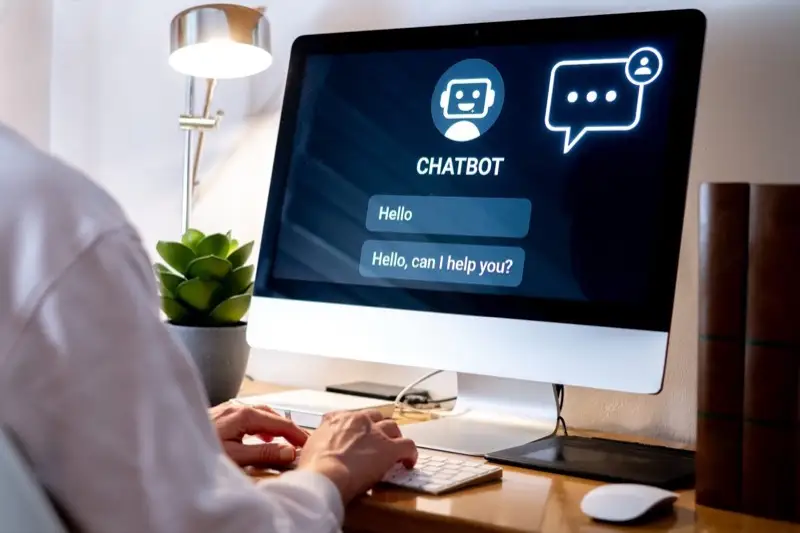
Unlike simple rule-based chat widgets that follow rigid scripted responses and break down the moment a customer asks something unexpected, AI chatbots use natural language processing (NLP) to genuinely understand customer questions and provide relevant, contextual answers. They learn from every conversation, improving their accuracy and helpfulness over time, and can handle complex multi-step enquiries that would have been impossible for earlier generations of automated support tools.
The technology behind these chatbots has advanced dramatically in recent years. Modern AI chatbots can understand intent even when customers use informal language, slang, or make spelling errors. They can maintain context across a conversation, remembering what was discussed earlier and building upon it. For businesses in Ghana and across Africa, where customer expectations are rising rapidly alongside increasing internet penetration, AI chatbots represent an opportunity to leapfrog traditional customer service models entirely.
Why Ghana Businesses Should Pay Attention
1. 24/7 Availability Without 24/7 Staffing
Your customers do not stop having questions at 5 PM. An AI chatbot handles enquiries around the clock, answering product questions, providing order status updates, processing routine requests, and booking appointments whilst you and your team are asleep, at lunch, or focused on other priorities. For businesses that serve customers across different time zones, or those whose customers tend to browse and shop outside traditional business hours, this always-on availability is transformative.
Consider the e-commerce business owner whose customers frequently have questions about sizing, shipping times, or return policies at 10 PM. Without a chatbot, those potential customers either wait until morning (and may lose interest) or abandon their purchase entirely. With an AI chatbot, those questions are answered instantly, and the sale is completed before the customer has a chance to reconsider.
2. Multilingual Support for Diverse Markets
Modern AI chatbots can communicate in multiple languages, including Twi, Ga, Ewe, Hausa, and other Ghanaian languages alongside English. This multilingual capability makes your business more accessible to a broader customer base and demonstrates cultural sensitivity that builds trust and loyalty. For businesses operating across multiple regions in Ghana or serving diaspora communities abroad, this feature alone can significantly expand your addressable market.
Language barriers are one of the most common reasons customers disengage from digital services. By offering support in the language your customers are most comfortable with, you remove friction from the customer journey and create a more inclusive experience that resonates with communities who are often underserved by technology.
3. Meaningful Cost Reduction
A single AI chatbot can handle hundreds of simultaneous conversations, something that would require a large and expensive call centre to replicate. Businesses globally report 30 to 50 per cent reductions in customer service costs after implementing AI chatbots, with some seeing even greater savings as the chatbot learns and improves over time. These savings can be reinvested in areas that drive growth, such as product development, digital marketing, or expanding your team in roles that require genuinely human skills.
It is worth noting that cost reduction is not just about replacing human agents. AI chatbots also reduce costs by resolving issues on the first interaction (reducing repeat contacts), by deflecting simple questions away from your support team (allowing them to focus on complex cases), and by providing consistent answers that reduce the errors and misunderstandings that lead to escalations and complaints.
4. Instant Response That Drives Conversions
Customer expectations around response times have shifted dramatically. Studies show that 82 per cent of consumers expect an immediate response to sales-related questions, and anything longer than a few minutes can feel like an eternity. AI chatbots deliver instant answers, improving both customer satisfaction and conversion rates. For businesses where the decision to purchase is made in moments, the difference between an immediate response and a 30-minute wait can be the difference between a sale and a lost customer.
Real Use Cases Across Industries
AI chatbots are already delivering measurable results across a wide range of industries in Ghana and beyond:
- E-commerce: Answer product questions, provide sizing guidance, track orders, process returns and exchanges, and recommend complementary products based on browsing history.
- Hospitality: Handle room and table bookings, answer frequently asked questions about facilities and amenities, manage check-in information, and provide local area recommendations to guests.
- Healthcare: Schedule and reschedule appointments, provide basic health information and pre-visit instructions, triage enquiries by urgency, and send automated reminders that reduce no-show rates.
- Financial Services: Check account balances, explain product features and eligibility criteria, guide customers through application processes, and flag suspicious activity for human review.
- Education: Answer admissions enquiries, provide course information, assist with registration processes, and offer study support resources to current students.
Getting Started with AI Chatbots
You do not need to build a chatbot from scratch. Platforms like Tidio, Intercom, and Drift offer plug-and-play AI chatbot solutions that integrate with your website in minutes, allowing you to get up and running quickly with minimal technical expertise. These platforms typically offer free tiers or affordable starter plans that make them accessible to businesses of any size.
For businesses with more specific requirements, such as deep integration with existing CRM and ERP systems, support for local languages, or compliance with industry-specific regulations, a more customised solution may be the better path. Working with a software development team that understands both the technology and the local business context ensures your chatbot is built to serve your customers effectively from day one.
Regardless of which approach you choose, start by identifying the most common customer questions your business receives. These frequently asked questions form the foundation of your chatbot's knowledge base and represent the quickest wins in terms of reducing support workload and improving response times.
The Human Touch Still Matters
AI chatbots work best as the first line of support, handling routine questions efficiently and escalating complex or sensitive issues to human agents seamlessly. The goal is not to replace your customer service team; it is to free them from repetitive tasks so they can focus on the conversations that truly require empathy, judgement, and a human touch.
The most effective implementations create a smooth handoff between chatbot and human agent, where the agent receives the full context of the conversation so the customer never has to repeat themselves. This hybrid approach combines the efficiency and availability of AI with the emotional intelligence and problem-solving ability of your team, delivering an experience that is better than either could provide alone.
Interested in adding AI-powered chat to your website? Talk to Faciotech about our consulting and advisory services to find the right solution for your business.